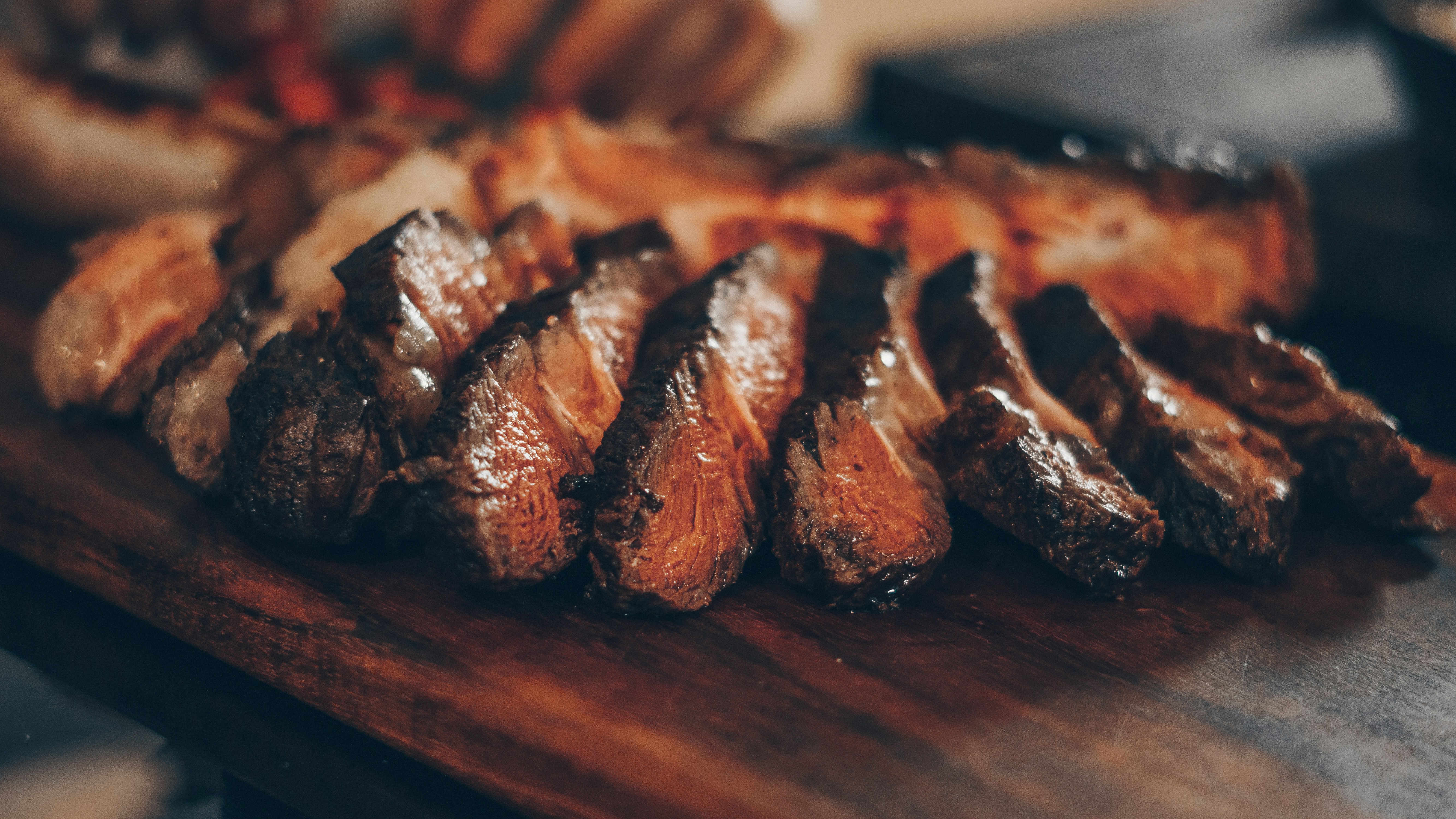
It's not a mis-steak: Eating more meat could help a certain few reduce their dementia risk
By Olivia Henry, the Australian Science Media Centre
Eating more meat could be linked to a lower risk of dementia in certain high-risk individuals, according to international researchers who looked at data from over 2,000 Swedish adults over 15 years.
The team found those with a specific variation of the Apolipoprotein E gene (APOE), which affects how the body is able to move cholesterol around the body, could see brain benefits when they ate more meat.
The findings go against traditional dietary guidelines that recommend limiting meat consumption, and interestingly the only genes that saw benefits were the APOE3/4 and APOE4/4 variants, which are traditionally linked to higher risks of dementia.
The AusSMC spoke to independent Aussie experts, who say the findings are interesting and open the door for more research about how diet recommendations could be tailored to genetics.
Professor Henry Brodaty from the Centre for Healthy Brain Ageing at UNSW told the AusSMC “this is a very interesting paper”.
“We all have a variety of apolipoprotein E, which we inherit from each parent,” he said.
“Over 60% of us have the 3/3 variant, about 25% have 3/4 and 2% have 4/4. One copy of APOEε4 increases risk of Alzheimer’s two to five times, depending on race, and 4/4 ten times or more.”
Actor Chris Hemsworth brought these variants into the spotlight in 2022, when he took a break from his career after learning he has the APOE4/4 genes.
And while this does not guarantee he will get dementia, as Professor Brodaty mentioned, his genetics mean he could be around ten times more likely to develop the disease than those with other APOE variants.
But the findings don’t point to eating as much meat as you can, just in case you carry a copy of the APOE4 variant.
The study found those like Hemsworth who carry the dementia-linked APOE variants saw higher total meat consumption linked to a lower risk of decline in brain function and dementia diagnoses during the study period, but those without APOE4 saw no such benefits.
“In contrast, higher processed meat intake was linked to worse outcomes,” Dr Kirstan Vessey from the University of New England said.
“The results suggest that when it comes to reducing the risk of developing dementia, diet advice may need to be tailored to genetics.”
However, much like a good steak, these findings should be taken with a pinch of salt, as Professor Anthony Hannan from the Florey Institute of Neuroscience and Mental Health pointed out.
“Whilst it is possible that increased meat consumption directly caused a decreased risk of dementia in genetically predisposed people, in such a cohort of aged individuals, there may be other factors at play,” he said.
“For example, it is possible that those who consumed more meat had other lifestyle (environmental exposure) factors in common that independently reduced the risk of dementia.”
If further research does find the link to be due to meat consumption and not other lifestyle factors, Professor Hannan suggests it could be related to our gut bugs.
“It is possible that key dietary factors are acting on the gut microbiome (the trillions of microbes that inhabit the gastrointestinal system), which in turn signals to the brain, to enhance brain health over time, via what we call the ‘microbiota-gut-brain axis’,” he said.
“If we can carry out more discovery research to work out exactly how this might happen, we could then develop new approaches to slow brain ageing, enhance brain health, and delay onset and progression of dementia.”
Read the full AusSMC Expert Reaction here.
This article originally appeared in Science Deadline, a weekly newsletter from the AusSMC. You are free to republish this story, in full, with appropriate credit.
Contact: Olivia Henry
Phone: +61 8 7120 8666
Email: info@smc.org.au