

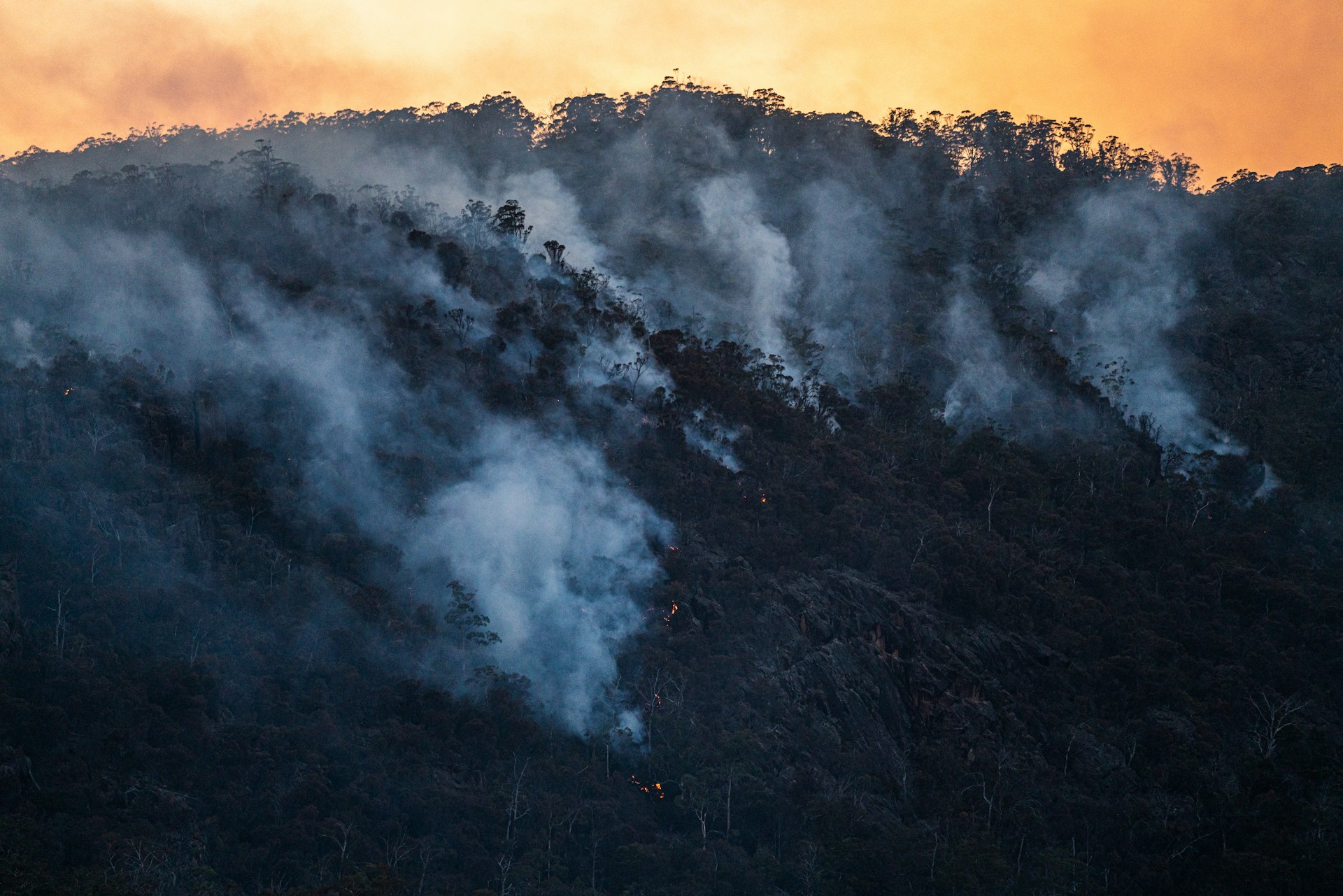
Fires are still burning across Victoria following last week's heatwave, with hundreds of homes and structures destroyed and over 400,000 hectares burnt across the state over the past week. While Victoria's bushfire danger season generally peaks in February, agricultural communities are already counting the cost of the worst season in several years, with one fatality linked to the Longwood fire.
Adjunct Professor Andrew Watkins, climate expert at Monash University, told the AusSMC the combination of high temperatures and strong winds last week culminated in the most extreme fire danger day in south-east Australia since the Black Summer bushfires of 2019-2020 on January 8.
"What’s unusual is having such extreme heat and fire conditions during a La Niña summer, and following a strong negative Indian Ocean Dipole," Prof Watkins said.
"Normally we would be more worried about floods with those climate drivers. But two factors have played a big role in 2025/26, including the strongest stratospheric warming above Antarctica since 2019, and climate change."
Prof Watkins said both these factors were leading to dry, hot conditions across southern Australia.
"Recent rains in some areas mean vegetation grew quickly but has since dried, meaning fast moving grassfires in some areas, which can kill."
Fire behaviour scientist Dr Philip Zylstra from the Australian National University told the AusSMC the damage done by the widespread Black Summer fires five years ago would still have an impact on fire behaviour today.
"The dense regrowth from the Black Summer fires means that many forests will now burn much more intensely than they did before. This means that flames will be bigger and harder to put out, even in conditions with no wind, but when the wind picks up, any fire burning in that country will be more likely to create a firestorm," he said.
"In a few more years, that fire risk will start to die down as the forest recovers, but there are two takeaways for the meantime. Firstly, forest burnt five years ago is not ‘safer’ because of low fuel loads. Secondly, preventing or catching fire while it’s still small is more important than ever because we don’t want to restart that regrowth cycle."
Associate Professor Jim Radford from La Trobe University said the full ecological toll of the fires over the past week is not yet known, but it was "unprecedented" to see fires burning across so many different areas of Victoria, and both bush and farming land had been heavily impacted.
"While many different vegetation types have been impacted (wet forests, dry woodlands, mallee and shrublands), these fires are not restricted to forested areas. Huge areas of agricultural land have been burnt right across the state," he said.
Animals and pasture expert Dr Danica Parnell from the University of Melbourne said stock across the state would be facing several threats in the wake of fires in their region.
"Heat stress has an impact on animal welfare and productivity, especially as paddocks have been burnt, and shade and fresh water is limited. With large areas of grazing country now damaged, stock may face short feed supply and exposure to ash, dust, and smoke," she said.
"Right now, producers or volunteers who may be helping should continue to monitor for behavioural signs of heat stress - rapid open-mouth panting, restlessness, more standing or shade seeking behaviours, reduced eating, drooling, and lethargy. These indicate signs animals are struggling to cool down."
"The priority is to keep them hydrated as best as possible with clean water, providing any available shade or shelter, and supplementing feed where pasture is lost with hay, silage, or grain. Keep livestock off burnt areas until no smoke or heat lingers, as hot ash, embers, and dry or scorched soils can cause lameness or injury."
Dr Paul Cheng, Associate Professor in Livestock Nutrition and Grazing Management at The University of Melbourne, said the challenges of keeping heat-affected stock healthy were exacerbated when multiple regions were affected by fire at the same time, with fewer unaffected areas able to provide quality feed.
"Traditionally, producers relied on regional variability to balance feed shortages, but that buffer is becoming less reliable," he said.
"While climate variability has always shaped Australian agriculture, recent decades have seen an increase in the frequency and intensity of extreme heat, and it becomes a less predictable event. This makes reliance on ‘just-in-time’ fodder supply increasingly risky. Planning protected fodder reserves ahead of extreme weather is one of the most practical and effective ways to safeguard livestock welfare under current and future conditions."
For communities affected by fire damage, rural health expert Dr Kylie McIntyre from La Trobe University said recovery will be "not only about safety and rebuilding homes, but about rebuilding lives."
"After traumatic events, it is normal for people to feel helpless, hopeless, anxious, and overwhelmed. Valued activities such as work, self-care, and leisure are usually disrupted and individuals may question the meaning of life or 'why' this has happened to them," Dr McIntyre said.
'It is important that people are supported to restore meaning, everyday routines, and a sense of belonging. My research with Victorians impacted by floods and with first responders shows that meaningful activities such as creative pursuits, cooking, exercise, and cultural and spiritual practices can be particularly important for trauma recovery. Where possible, individuals should be supported to help with community clean-up and recovery efforts as this allows people to contribute and regain a sense of control after experiencing loss."
"Communities can support individuals impacted by the recent bushfires by providing practical assistance with clothing, transport, or care; providing opportunities for community gatherings, and by inviting others to join everyday activities such as walks or shared meals."
"Simply listening without judgement, sharing skills, or helping someone re-engage with a valued routine can make a lasting difference to recovery and well-being."
You can read the first AusSMC Expert Reaction here and the second here.
This article originally appeared in Science Deadline, a weekly newsletter from the AusSMC. You are free to republish this story, in full, with appropriate credit.
Contact: Rachel McDonald
Phone: +61 8 7120 8666
Email: info@smc.org.au